
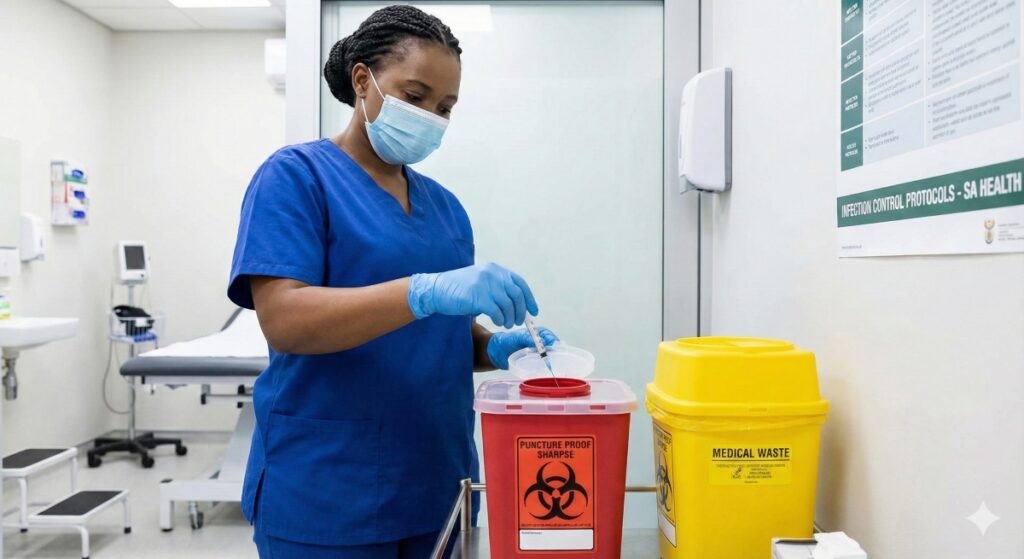
Ensuring medical waste compliance is critical for every healthcare facility in South Africa. Are you confident that your current waste disposal contract protects you from a 10-year prison sentence? In the healthcare sector, the focus is rightfully on patient care. However, under the National Environmental Management: Waste Act (NEM:WA), the mismanagement of Health Care Risk Waste (HCRW) is not just a procedural error—it is a criminal offence. Compliance with regulations regarding Medical Waste Compliance South Africa is essential for legal protection and operational efficiency.
Understanding Medical Waste Compliance in South Africa can significantly impact your facility’s operations and legal standing.
Implementing effective strategies for Medical Waste Compliance in South Africa can enhance your facility’s reputation and ensure the safety of patients and staff.
The "Cradle-to-Grave" Principle
Under Section 16 of NEM:WA, the ‘Duty of Care’ principle applies. This means you remain responsible for the waste from the moment it is generated until its final, lawful destruction.
- If your provider dumps waste illegally, you are liable.
- If waste is found in general municipal bins, you are liable.
- Penalties include up to R10 million in fines.
Segregation: Life-Saving Colour Codes
- Sharps Waste: Needles and blades must go in rigid containers.
- Anatomical Waste: Tissues and organs for incineration.
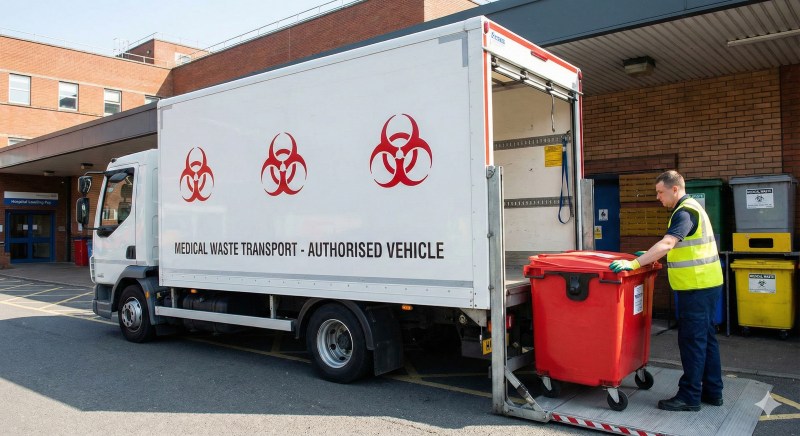
The Department of Health vs. Environmental Acts
Many practice managers are confused about which rules apply to them. The truth is, you must comply with both sets of legislation:
NEM:WA (Environmental): Focuses on the “Cradle-to-Grave” tracking. This is why you need a Safe Disposal Certificate to prove your waste was destroyed.
National Health Act (Clinical): Focuses on infection control inside your building. This requires a designated Waste Officer and strict hygiene protocols under SANS 10248.
Why SANS 10248 is Non-Negotiable
The SANS 10248-1:2008 standard is the benchmark for health inspectors. It dictates that:
- Segregation must happen at the source (never mix sharps with general waste).
Storage Areas must be secure, ventilated, and inaccessible to the public.
Documentation must be kept on-site for at least 5 years.
Medical Waste Compliance South Africa is essential for adhering to these standards.
The 3 Reasons Facilities Fail Compliance Audits
Recent studies in Gauteng have exposed alarming gaps. If an inspector walked into your facility today, you would likely fail on one of these three points:
- The "Ghost" Plan: 79% of officers say they have a Waste Plan, but few actually use it. A plan filed in a drawer is not compliance.
- Liability Ignorance: 84% of managers do not understand Section 16 Environmental Liability.
- No Oversight: Only 30% of facilities have a designated Waste Committee.
The Mandatory Role of the Waste Officer
Did you know that under the National Health Act regulations, every health establishment must legally appoint a designated Waste Management Officer (WMO)?
If a health inspector visits your facility and asks, “Who is responsible for waste here?” and your answer is “The cleaning staff” or “Everyone,” you are immediately non-compliant. You must have a specific staff member who is trained, responsible, and formally appointed in writing to oversee your waste management system.
The Waste Manifest: Your Only Proof
How do you prove to an inspector that your waste was not dumped illegally? Your invoice is not proof. Your contract is not proof. Only a Waste Manifest is legal proof.
If you cannot produce a signed manifest verifying that your waste reached a licensed disposal facility, the law assumes you are still in possession of that waste or have disposed of it illegally.
Compliance is not expensive; non-compliance is. Do not wait for a needle-stick injury or an environmental inspector to expose gaps in your system.
Download the Health Professions Council of South Africa's Guidelines for the Management of Health Care Waste.